

December 1, 2025
The United States skips World AIDS Day for the first time ever

🗞️ The Latest News
World AIDS Day
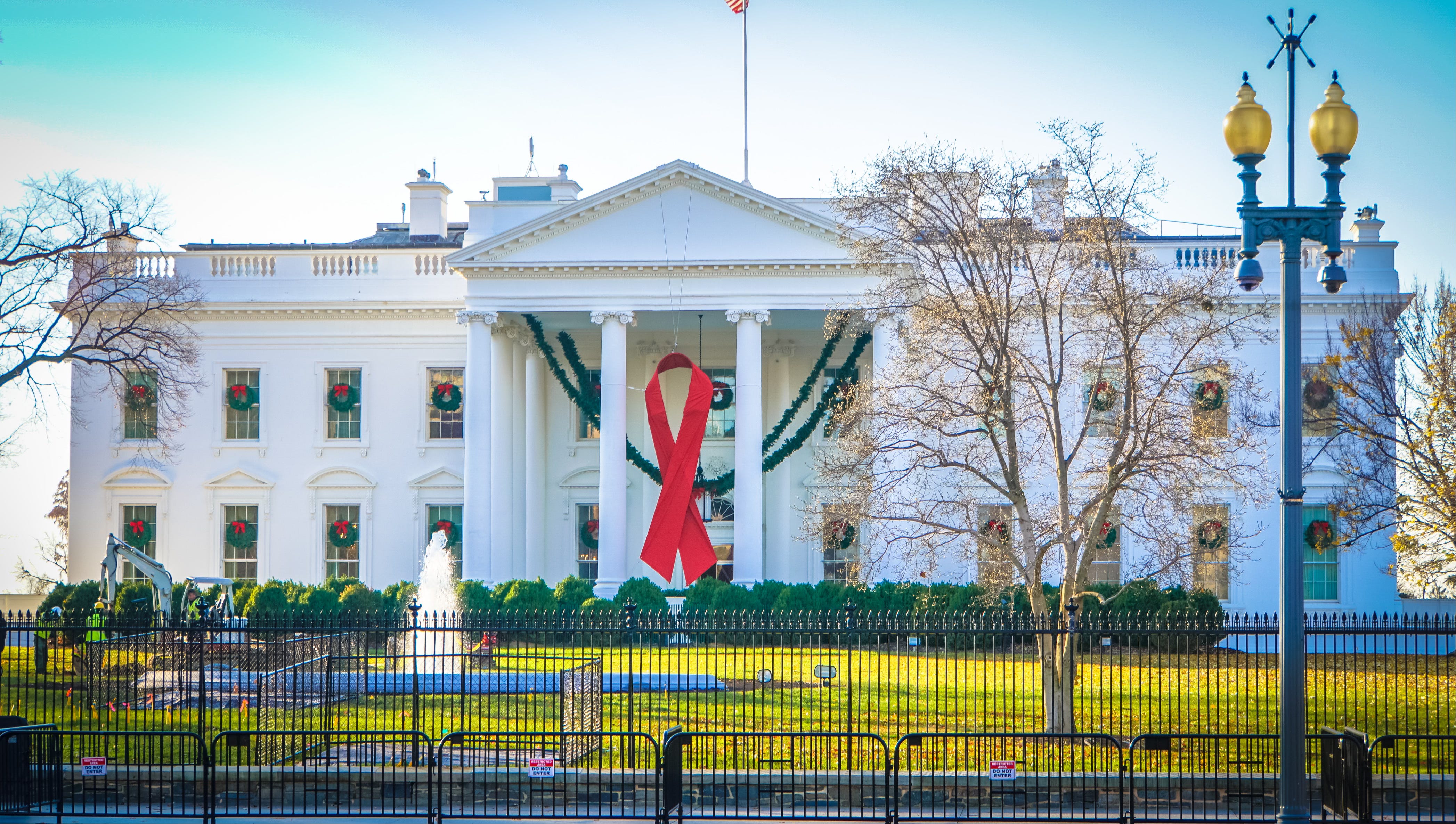
Ever since it began in 1988, the United States has recognized World AIDS Day. Until this year. The administration has told staff not to acknowledge the day, not to host events, and certainly not the spend any funds in relation to it. It is a slap in the face to all those who have been lost to HIV, healthcare workers here and around the world who are caring for HIV positive patients, and all the millions continuing to live with the disease. The President’s Emergency Plan for AIDS Relief (Pepfar) is one of the United States’ most successful global health programs. It has saved around 26 million lives and prevented nearly 8 million babies from being born with HIV. Read my friend and former colleague’s Substack to hear about the visual representation of Pepfar’s success that she saw first hard. But Pepfar’s work is not done, and now is not the time to step back. Not recognizing World AIDS Day is just another representation of this administration’s cruelty.
Hurricane Melissa Response
I mentioned in my last post how important it will be to watch the administration’s response to Hurricane Melissa without our country’s humanitarian response agency, USAID. The State Department is claiming success under a “new paradigm” of response. However, in reality the response was successful only because a few number of USAID experts with experience followed the tried and true USAID playbook. Jeremy Konyndyk, former lead for humanitarian response at USAID and current president of Refugees International, posted a thread on X about this.

Meeks Demands Answers on the Administration’s Food Waste
Representative Meeks (D-NY) is once again pressuring the executive branch to provide answers on harms caused by the disruption to foreign assistance. He along with his House Foreign Affairs Committee colleague Representative Amo (D-RI) are asking the USAID Office of the Inspector General to look into waste of food assistance. As they mention, there have been reports of millions of dollars of food being destroyed or allowed to rot due to the administration’s actions or inaction. These incidents can erode the credibility of U.S. foreign aid, whatever credibility still remains, and could be a misuse of congressionally authorized funds. Thank you once again to Representative Meeks for not letting these actions go unaddressed.
🚨Action You Can Take
Remembering USAID Through the Arts
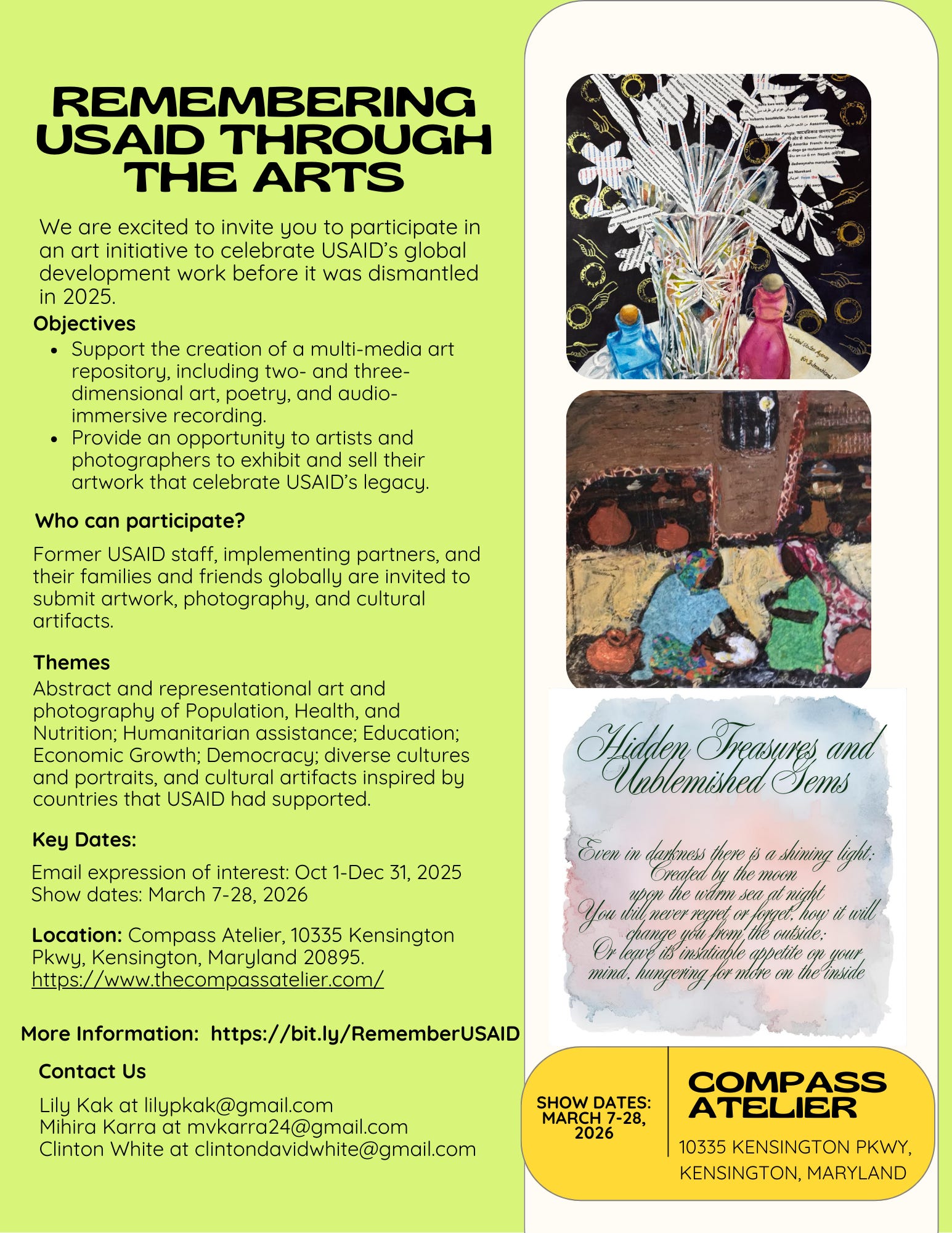
If you are an artist, consider contributing your work to a show honoring USAID. It will be held in March 2026 at The Compass Atelier outside Washington, DC and submissions are being accepted through the end of the year. You can see details in the prospectus.
📖 What I’m Reading
On the Brink of Catastrophe
This research brief documents the extensive work by Physicians for Human Rights (PHR) to investigate disruptions to HIV programs in Tanzania and Uganda.1 They used focus groups and interviews to collect stories from healthcare workers, patients, and employees of HIV focused organizations carrying out the work. Along with the harms to physical and mental health and to health systems, they also documented the trust that has been broken. This is also a constant theme I have been hearing when I listen to the Global Development Interrupted podcast. Trust may very well be the hardest thing for us to rebuild.
As part of PHR’s work, they recorded interviews and you can actually listen and hear first hand from healthcare workers in Tanzania and Uganda. If you can’t read the whole article, just listening to those voices is well worth your time. The brief also concludes with recommendations to the UN, the local governments, and other groups. Here are their recommendations to the United States government.
Immediately restore, renew, preserve, and protect global health funding for essential HIV services, including full funding commensurate with need for global HIV programs in the FY 2026 budget, and subsequently reauthorize the PEPFAR program.
Reinstate support for HIV treatment; community-led outreach; PrEP access; differentiated service delivery models; peer-led health worker initiatives; community-led service delivery; and embedded health care workers providing HIV testing, counseling, and linkage to care for key populations.
Restore and preserve PEPFAR and other global health funding in a way that supports a planned, feasible, and transparent transition to country leadership and ownership of programs.
In Mozambique, an ISIS insurgency is newly energized as US cuts impact aid programs
As a surprise to no-one who works in international development, the drawback of American support has provided space for the expansion of terrorist organizations. This CNN report details how this is happening in the north of Mozambique and includes a short video.2 This is a stark reminder of how foreign aid helps not only those in other countries, but also keeps us safe right here at home in the United States.

PHR (September 3, 2025) On the Brink of Catastrophe: U.S. Foreign Aid Disruption to HIV Services in Tanzania and Uganda https://phr.org/our-work/resources/on-the-brink-of-catastrophe-u-s-foreign-aid-disruption-to-hiv-services-in-tanzania-and-uganda/
Walsh, N., Wright, N., Come, S. (November 21, 2025) In Mozambique, an ISIS insurgency is newly energized as US cuts impact aid programs CNN https://www.cnn.com/2025/11/21/africa/mozambique-isis-insurgency-us-aid-cuts-intl-cmd